
Discipline, Sacrifice, and Redemption
Christian penance is more than the acceptance of suffering. It is a tradition of spiritual discipline directed toward repentance, the purification of the soul, and the restoration of the human person in his relationship with God.
From the ancient practices of fasting and mortification to the sacrificial mystery of the Cross, the Christian tradition offers a profound understanding of the relationship between the body, the will, and the divine.
This series explores the theological foundations of penance: its purpose, its practices, and its ultimate end.
The Series
I. Christian Penance: To What End?

Why does the Christian undertake penance? Is it punishment, atonement, purification, or something more profound?
An exploration of repentance, suffering, and the restoration of the soul.
II. Penance, Asceticism, and Mortification: Three Paths of Discipline

Three related concepts, each expressing a different dimension of Christian spiritual formation.
An examination of the correction of sin, the training of the will, and the overcoming of disordered desire.
III. The Christian Meaning of Sacrifice: What Is Offered, and to Whom?
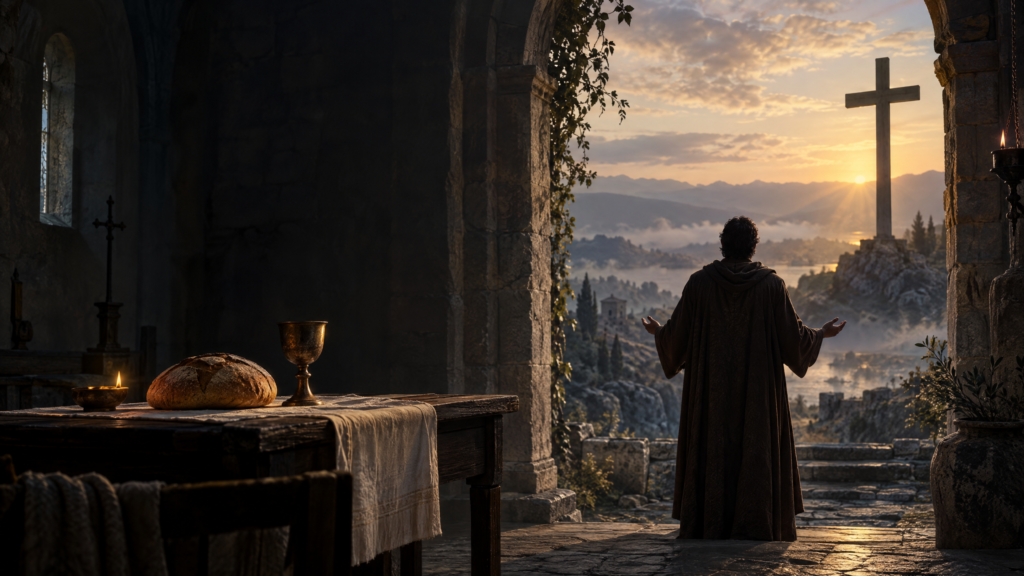
The Cross, the Eucharist, and the offering of one’s life.
An exploration of sacrifice as the willing response to divine grace and the orientation of the whole person toward God.
The End of Discipline
Penance is not the glorification of suffering. Asceticism is not the rejection of the body. Mortification is not the destruction of the person.
These practices belong to a larger Christian understanding of spiritual transformation.
The ultimate end is the restoration of the soul and its orientation toward God.
The purpose of discipline is not suffering, but the formation of a person capable of loving the highest good.