

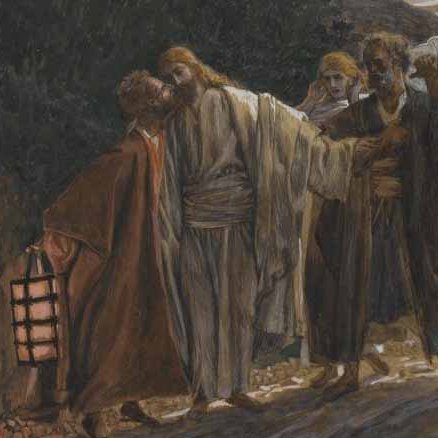
In order to learn from other people’s experiences, it helps to analyze the different opportunities that present themselves, and how they are taken or missed. This principle holds true if we wish to learn from Scripture. Let us consider Judas Iscariot and Simon Peter, and see what we can learn from their respective behavior and choices during the dolorous Passion of their – and our – Lord Jesus Christ.
Judas’ Regrets
The Bitter Passion of Our Lord produced various opportunities for repentance for His friends. Judas had the opportunity to repent, very much like St. Peter. Scripture tells us,
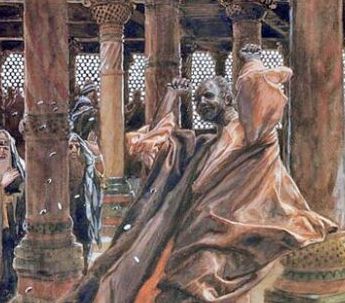
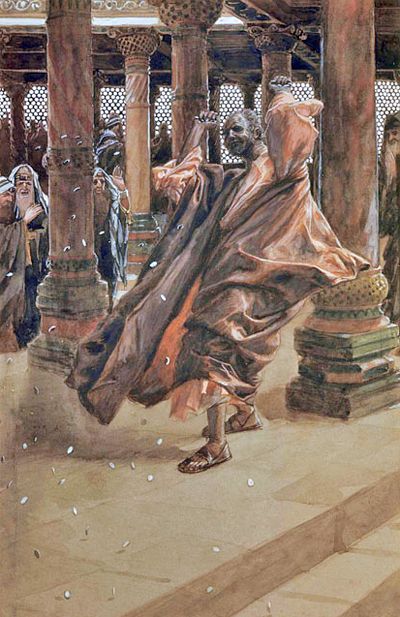
Then Judas, who betrayed him, seeing that he was condemned, repenting himself, brought back the thirty pieces of silver to the chief priests and ancients,
Saying: I have sinned in betraying innocent blood.
Mat 27:3-4
In the Visions of Anne Catherine Emmerich, this situation is elaborated on a little:
“Then, but too late, anguish, despair, and remorse took possession of the mind of Judas. Satan instantly prompted him to fly. He fled as if a thousand furies were at his heel, and the bag which was hanging at his side struck him as he ran, and propelled him as a spur from hell; but he took it into his hand to prevent its blows.”
At this point of the narrative, Sister Emmerich inserts an observation into the account of her Visions:
“He fled as fast as possible, but where did he fly?
Not towards the crowd, that he might cast himself at the feet of Jesus, his merciful Saviour, implore his pardon, and beg do die with him, — not to confess his fault with true repentance before God, but to endeavour to unburden himself before the world of his crime, and of the price of his treachery.“
Let this sink in for a moment.
We all know how things go from here: Regret turned into despair.
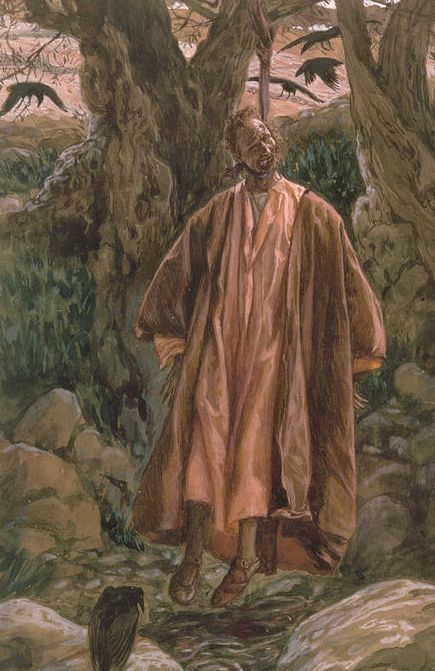
And having cast down the pieces of silver in the temple, he left the place, and went away and hanged himself.
Mat 27:5
Worse than the sin of betrayal is the sin of despairing of Divine Mercy.
Ponder the opportunity Judas missed, and what it resulted in.
Peter’s Denial
Things go very differently for Simon Peter.
Despite all his recent protestations, Simon Peter famously denied our Lord thrice while at Caiphas’ house, then remembered how Jesus had foretold his weakness in this hour, upon which he went away and “wept bitterly”.
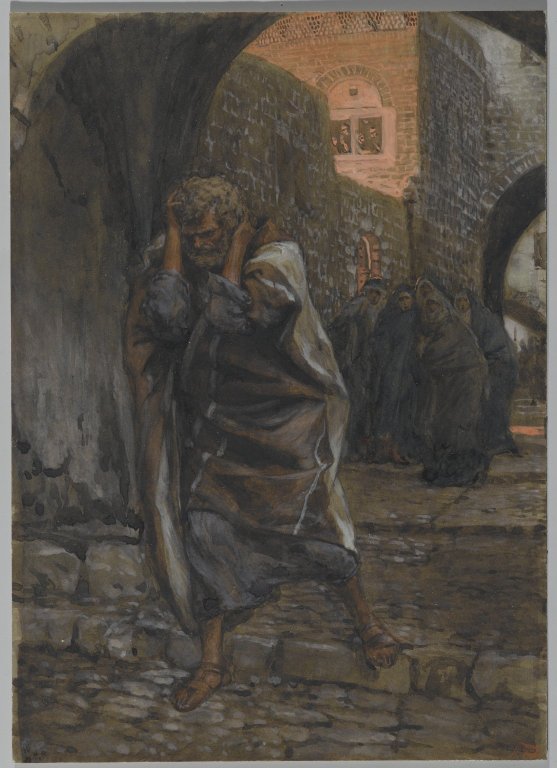
In the words of Blessed Anne Catherine Emmerich:
The cock then crowed again, and Jesus, who at that moment was led across the court, cast a look of mingled compassion and grief upon his Apostle. This look of our Lord pierced Peter to the very heart, — it recalled to his mind in the most forcible and terrible manner the words addressed to him by our Lord on the previous evening: ‘Before the cock crows twice, thou shalt thrice deny me.’ He had forgotten all his promises and protestations to our Lord, that he would die rather than deny him — he had forgotten the warning given to him by our Lord; — but when Jesus looked at him, he felt the enormity of his fault, and his heart was nigh bursting with grief. He had denied his Lord, when that beloved Master was outraged, insulted, delivered up into the hands of unjust judges, — when he was suffering all in patience and in silence. His feelings of remorse were beyond expression; he returned to the exterior court, covered his face and wept bitterly; all fear of being recognised was over; — he was ready to proclaim to the whole universe both his fault and his repentance.
Blessed Sister Emmerich comments on this scene as well:
What man will dare assert that he would have shown more courage than Peter if, with his quick and ardent temperament, he were exposed to such danger, trouble, and sorrow, at a moment, too, when completely unnerved between fear and grief, and exhausted by the sufferings of this sad night? Our Lord left Peter to his own strength, and he was weak; like all who forget the words: ‘Watch and pray, that ye enter not into temptation.’
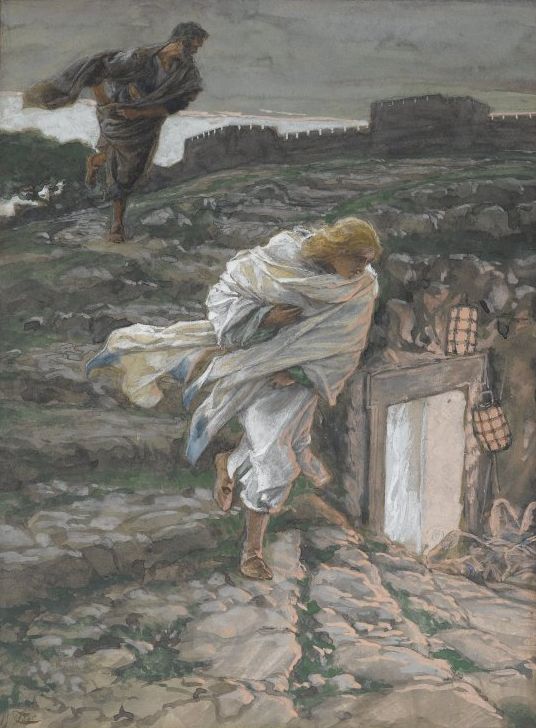
This denial did not, however, drive Simon Peter to despair. Instead, the very next time we see him in the Gospel according to Luke, “Peter, rising up, ran to the sepulchre.”
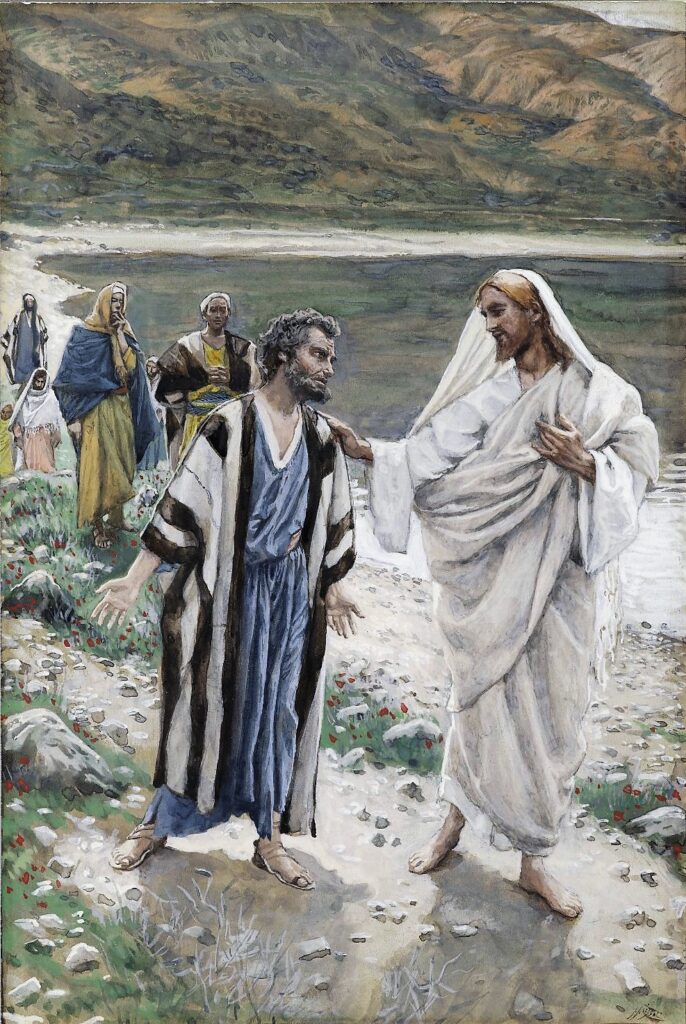
Eventually, as the Gospel of John tells us, the Risen Lord requires of Peter three affirmations to undo the three denials.
When therefore they had dined, Jesus says to Simon Peter, Simon, son of Jonas, lovest thou me more than these? He says to him, Yea, Lord; thou knowest that I am attached to thee. He says to him, Feed my lambs.
He says to him again a second time, Simon, son of Jonas, lovest thou me? He says to him, Yea, Lord; thou knowest that I am attached to thee. He says to him, Shepherd my sheep.
He says to him the third time, Simon, son of Jonas, art thou attached to me? Peter was grieved because he said to him the third time, Art thou attached to me? and said to him, Lord, thou knowest all things; thou knowest that I am attached to thee. Jesus says to him, Feed my sheep.
John 21:15-17
Thus, instead of despairing, Simon Peter, who had ‘lived down’ more than one rebuke from Our Lord during His ministry, becomes the rock on which Christ Jesus founded His Church.
Deus, propitius esto mihi peccatori.
***
O God, have compassion on me, the sinner.
LK 18:13