


Why Protestants Would Benefit from Penance and Mortification of the Flesh
Recovering the Christian art of self-denial, repentance, and mastery over the appetites
There is a curious irony in the history of Protestant Christianity. In seeking to protect the primacy of faith, the authority of Scripture, and the sufficiency of Christ’s sacrifice, many Protestant traditions distanced themselves from practices associated with Catholic asceticism. Yet among the practices that became suspect were disciplines that Christians had long employed to cultivate repentance, restrain disordered appetites, prepare for prayer, and bring their daily conduct into closer conformity with their professed beliefs.
Penance. Fasting. Abstinence. Bodily discipline. Mortification of the flesh.
These expressions may sound foreign, even vaguely threatening, to some contemporary Protestants. They may suggest medieval superstition, a theology of earning salvation through suffering, or an unhealthy hostility toward the body. But such associations obscure a more fundamental question: What happens to a Christian faith that teaches self-control but neglects the disciplined practices through which self-control is cultivated?
The answer matters well beyond denominational disputes. A person may profess the correct doctrine, attend church regularly, read Scripture, and affirm the importance of morality while remaining thoroughly governed by appetite, distraction, vanity, resentment, and the desire for immediate gratification.
Christianity has never lacked a vocabulary for this problem. What it sometimes lacks is the willingness to confront it through disciplined action.

1. The body is not the enemy, but neither should it be the master
The expression mortification of the flesh derives from the Christian understanding that fallen human beings must struggle against disordered desires and habits.
Paul writes in Romans 8:13 that believers must put to death the deeds of the body through the Spirit. In Colossians 3:5, he commands Christians to put to death what is earthly in them. In 1 Corinthians 9:27, he describes disciplining his body and bringing it under control.
These are not descriptions of passive belief. They concern the transformation of conduct, the redirection of desire, and the cultivation of a life ordered toward something higher than immediate satisfaction.
The biblical distinction is not between a pure spirit and an inherently evil body. Christianity teaches the goodness of creation and anticipates the resurrection of the body. The problem is not embodiment itself but the condition in which appetite governs judgment, impulse overrides conscience, and the individual becomes incapable of resisting what he or she knows to be destructive.
Mortification, properly understood, is the discipline of refusing to allow every desire to become a command, in other words, of reasserting the rule of our God-given reason over the appetites of our fallen nature.
- The appetite for food is natural. Gluttony is not inevitable.
- Sexual desire is part of human existence. Its expression nevertheless requires moral judgment and self-command.
- Rest is necessary, but habitual indolence can become a form of enslavement.
- Anger may arise naturally, yet a person who cannot restrain it is not its master.
The same principle applies to modern compulsions: endless scrolling, compulsive entertainment, habitual consumption, pornography, gambling, and the persistent need for external approval.
A Christian who cannot voluntarily relinquish a pleasure, even temporarily, has reason to ask whether that pleasure has acquired too much authority over his life. Christ assures us in Mat 6:24 that we cannot serve two masters, and whatever has authority over us is essentially just that: a master. If a pleasure becomes our master instead of Christ, we cannot very well call ourselves Christians anymore.
Mortification is not a declaration of war against the body. It is an effort to restore the proper relationship between bodily desire, rational judgment, conscience, and spiritual purpose.
2. Penance is not the purchase price of forgiveness
One of the principal Protestant objections to Catholic penitential practices concerns the relationship between human actions and divine grace.
The Reformation insisted that sinners are justified by God’s grace through faith, not by accumulating meritorious works. This objection should be taken seriously. No amount of fasting, bodily discomfort, charitable giving, or personal austerity can compel God to forgive a sinner or place God under an obligation to the person performing the act.
This is not to say that the Catholic Church teaches salvation through works. However, many conflicts between Christians today revolve around the relationship between grace, faith and works, and in the end the proverbial baby is thrown out with the equally proverbial bathwater, in other words: Rejecting the idea that suffering purchases forgiveness does not require rejecting every disciplined practice associated with repentance.
Penance can be understood as the practical expression of contrition: acknowledging wrongdoing, turning away from it, making restitution where possible, and undertaking the difficult work of correcting one’s conduct.
Consider a person who has repeatedly acted out of greed. Merely acknowledging the sin is a beginning, not the completion of repentance. The individual might impose limits on unnecessary consumption, give generously to those in need, and learn to tolerate the discomfort of going without.
Someone who has cultivated a habit of anger might practice silence rather than retaliate, accept an insult without immediately demanding satisfaction, and undertake the more difficult task of reconciling with someone they have wronged.
Someone who has neglected prayer through habitual distraction might deliberately surrender a portion of leisure to silence, contemplation, and Scripture.
None of these actions purchases forgiveness. Their purpose is to give repentance a practical form.
Grace does not make moral transformation unnecessary, neither does transformation purchase God’s love. Penance makes transformation possible so that we can turn away from sin and choose to do what is pleasing to God as a proper response to God’s saving Grace.
This distinction offers Protestants a way to recover the substance of penitential discipline without abandoning their theological convictions.
3. The Reformers did not simply reject fasting
The historical record is more complicated than the familiar contrast between Catholic asceticism and Protestant freedom suggests.
Martin Luther, John Calvin, and other Reformers objected to fasting when it was treated as a meritorious work, imposed as an unquestionable religious obligation, or reduced to compliance with dietary regulations. They did not thereby establish that fasting was spiritually useless.
Calvin, in particular, defended fasting as a discipline that could restrain bodily appetites, prepare the mind for prayer, and express humility and repentance. The Reformed tradition also retained practices of communal fasting, especially in times of crisis or when seeking divine guidance.
Lutheran teaching likewise distinguished between fasting as a useful form of bodily training and fasting as an attempt, as he perceived it, to earn God’s favor. Article XXVI of the Augsburg Confession discusses the abuse of traditions concerning food and fasting while recognizing the usefulness of bodily discipline when rightly understood.
The Methodist tradition provides another striking example. John Wesley practiced fasting and encouraged it among Methodists as a means of repentance, prayer, and spiritual growth. The United Methodist Church continues to describe fasting as a Christian discipline that can help believers redirect their attention toward God and their responsibilities to their neighbors.
These examples are important because they undermine the idea that recovering ascetic discipline necessarily means rejecting Protestant theology.
The historical disagreement was not simply over whether Christians should exercise self-denial. It concerned the purpose, authority, and proper use of such practices.
A useful distinction emerges: fasting undertaken in humility and Christian freedom is not the same as fasting undertaken to display superior holiness or earn divine favor. Again, this is not to say that Catholics fast to display superior holiness or to earn divine favors. It only serves to illustrate how one side has been perceived by the other.
The Protestant inheritance already contains resources for a serious recovery of ascetic practice. What is needed is not an abandonment of the Reformation but a fuller engagement with its own spiritual traditions.
4. Fasting teaches a lesson that sermons alone cannot teach
Fasting is perhaps the clearest example of a discipline through which bodily restraint can serve spiritual attention.
A person accustomed to satisfying hunger immediately encounters a small but revealing difficulty when voluntarily abstaining from food for a limited period. The body registers its demand. Habit insists upon satisfaction. The mind begins to negotiate.
The exercise creates an opportunity to distinguish necessity from impulse and discomfort from genuine danger.
This is not an argument that hunger is inherently holy or that the body becomes more virtuous in proportion to the suffering imposed upon it. Nor does fasting automatically make someone more compassionate, intelligent, or devout.
Its value lies, as in all sorts of voluntary suffering, in the discipline of intention.
A fast accompanied by prayer, self-examination, and charitable action can remind the practitioner that desire need not dictate conduct. It can create space for reflection that ordinary routines tend to crowd out. It can also expose the degree to which eating has become a response to boredom, anxiety, or emotional discomfort rather than hunger.
The lesson extends beyond food.
- A person can abstain from entertainment to recover the capacity for sustained attention.
- Someone can surrender unnecessary purchases to cultivate simplicity.
- Another can undertake a period of silence to resist the urge to dominate every conversation.
These practices share a common structure: the individual deliberately relinquishes something ordinarily desired in order to cultivate a more important capacity.
- Fasting is not a substitute for prayer.
- Abstinence is not a substitute for charity.
- Bodily discipline is not a substitute for faith.
They are practices through which faith may become more deeply integrated into everyday life, as the Scriptures put it:
But wilt thou know, O vain man, that faith without works is dead?
James 2:20
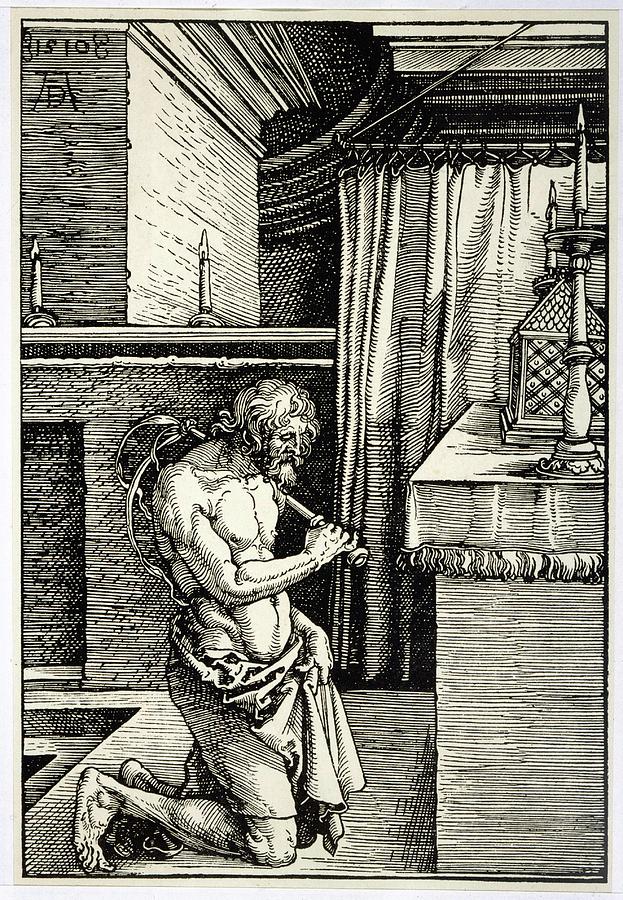
5. The mortification of pride
Perhaps the most difficult form of mortification is not physical at all.
It is the mortification of pride.
Pride is not merely the enjoyment of one’s abilities or the possession of self-respect. It also appears as the compulsion to be right, the refusal to acknowledge fault, the need to win every argument, and the expectation that others should accommodate one’s preferences.
- A person may willingly endure physical discomfort while remaining incapable of accepting criticism.
- Someone may fast regularly yet continue to treat others with contempt.
- Religious observance can even become another instrument of vanity when it supplies the individual with a sense of superiority over those who practice differently.
This is why ascetic discipline must be directed toward the reformation of one’s own character rather than the accumulation of impressive performances, and hence should done in private. Otherwise, as Jesus Christ tells us, “Verily I say unto you, They have their reward.”
The mortification of pride might require
- apologizing without qualification,
- accepting an inconvenience without complaint,
- performing an unrecognized act of service, or
- refraining from announcing one’s sacrifices to others.
It may require remaining silent when speaking would serve only to humiliate an opponent.
It may require admitting that a cherished opinion is mistaken.
These disciplines are often harder than giving up a favored food for a day because they strike at our image of ourselves.
They also reveal an essential truth: the flesh, in the moral and spiritual sense, is not limited to physical appetite. It includes those habitual impulses through which the self seeks gratification, dominance, recognition, and immunity from correction.
Asceticism done right must therefore reach into the will, the imagination, and the social personality.
6. Penance restores the seriousness of sin
Modern culture frequently treats wrongdoing as a problem of explanation.
We investigate the circumstances, identify contributing factors, discuss psychological influences, and examine the social environment. Such inquiries can be valuable. Understanding why someone behaves destructively may be necessary to prevent the behavior from recurring.
But explanation can also become evasion when it displaces responsibility.
Christian repentance requires something more demanding than the ability to explain oneself: It requires the willingness to recognize that one has done wrong and to accept the obligation to change.
Penance gives this recognition a practical dimension.
- If a person has been dishonest, repentance entails becoming truthful even when honesty carries a cost.
- If someone has exploited another, repentance may require restitution.
- If someone has cultivated cruelty, the task is not merely to feel remorse but to practice restraint, justice, and compassion.
The discomfort involved in such changes is not a payment that cancels sin. It is part of the work of ceasing to commit it.
This is especially important when the wrongdoing has become habitual. The will may sincerely desire reform while remaining attached to familiar patterns of conduct. Discipline provides a structure through which the individual can repeatedly choose differently. It is well known that habit is overcome by habit, wherefore practical penances serve as vehicle to habitualize different, better choices.
Repentance is not simply the emotion of regret. It is a reorientation of life.
7. Asceticism and freedom
One of the paradoxes of self-discipline is that voluntary limitation can increase freedom.
The person who must satisfy every appetite is not free, but enslaved. The person who cannot endure boredom without entertainment, frustration without retaliation, or desire without immediate gratification is governed by conditions that he or she may never have consciously chosen.
Such a person may possess numerous options while lacking the capacity to refuse any of them.
Ascetic discipline addresses this problem by cultivating the ability to act according to reason, that is to say, according to considered purpose rather than immediate, unreflected impulse.
This is not freedom understood as the unlimited satisfaction of preference. It is freedom as self-command.
The distinction is deeply relevant to Christian life, protestant and Catholic alike. The Christian is called not merely to believe that goodness is desirable but to develop the habits necessary to pursue it.
- Patience must be practiced.
- Generosity must be exercised.
- Chastity, temperance, courage, and humility require repeated decisions.
A faith that never challenges the believer to surrender anything risks becoming an affirmation of existing preferences rather than a means of transformation.
The point of asceticism is not to make our life miserable. It is to prevent the pursuit of comfort from becoming the organizing principle of our existence.
8. From private discipline to responsibility for others
Christian asceticism reaches its proper expression when self-denial serves something beyond the self.
Isaiah 58 is particularly important here. The prophet condemns a fast that coexists with exploitation and injustice, contrasting empty religious observance with the work of loosening oppression, feeding the hungry, and caring for those in need.
The implication is unmistakable: bodily abstinence as the end rather than a means is inadequate.
A person who fasts but remains indifferent to the suffering of others has misunderstood the purpose of the discipline. Someone who practices austerity while using it to justify contempt for the less disciplined has merely found another form of self-exaltation.
Christian self-denial should make a person more available to obligations that appetite and vanity would otherwise displace.
- Money not spent on unnecessary luxuries can be given to someone in need.
- Time not surrendered to distraction can be devoted to family, community, prayer, or service.
- Anger restrained can prevent the injury of another person.
- Pride relinquished can make reconciliation possible.
In this sense, penance is not an inward exercise detached from the world. It is one means of preparing a person to act more justly within it: While the practice itself often remains hidden and private, its fruits become evident in increased love for our neighbor.
The ultimate measure of ascetic practice is not how much discomfort someone can endure. It is whether the discipline contributes to a more truthful, responsible, and charitable life.
9. Recovering a Protestant asceticism
What might a renewed Protestant practice of penance and mortification look like?
It need not begin with severe bodily austerities, elaborate penitential regulations, or the imitation of monastic life. It can begin with modest, voluntary, sustainable disciplines undertaken with clear spiritual intentions.
A believer might observe a regular period of fasting, where medically appropriate, accompanied by prayer and charitable giving. Another might establish a daily period of silence and examination of conscience. Someone else might abstain from unnecessary consumption, practice greater restraint in speech, or undertake concrete acts of restitution for past wrongdoing.
The important questions are straightforward:
- What appetite or habit has acquired too much authority over my conduct?
- What recurring fault do I acknowledge but repeatedly excuse?
- What comfort am I unwilling to surrender, even when surrender would serve a higher obligation?
- What practical action would make my repentance visible in my conduct?
- Does my discipline make me more humble, more truthful, and more attentive to others?
Such questions place the emphasis where it belongs: not on the spectacle of sacrifice but on the transformation of the person. Do not imitate the Pharisee on the street corner.
These practices should be voluntary rather than coercive, adapted to individual circumstances, and undertaken without the belief that physical suffering earns salvation, much like church attendance does not earn salvation. Fasting must also be approached prudently: people with medical conditions, a history of eating disorders, or other relevant health concerns should seek appropriate professional guidance and choose safer alternatives where necessary. Deliberate injury, dangerous deprivation, and self-punishment are not requirements of Christian devotion.
Mortification is not the destruction of the self. It is the disciplining of those impulses that prevent the self from becoming what it ought to be.
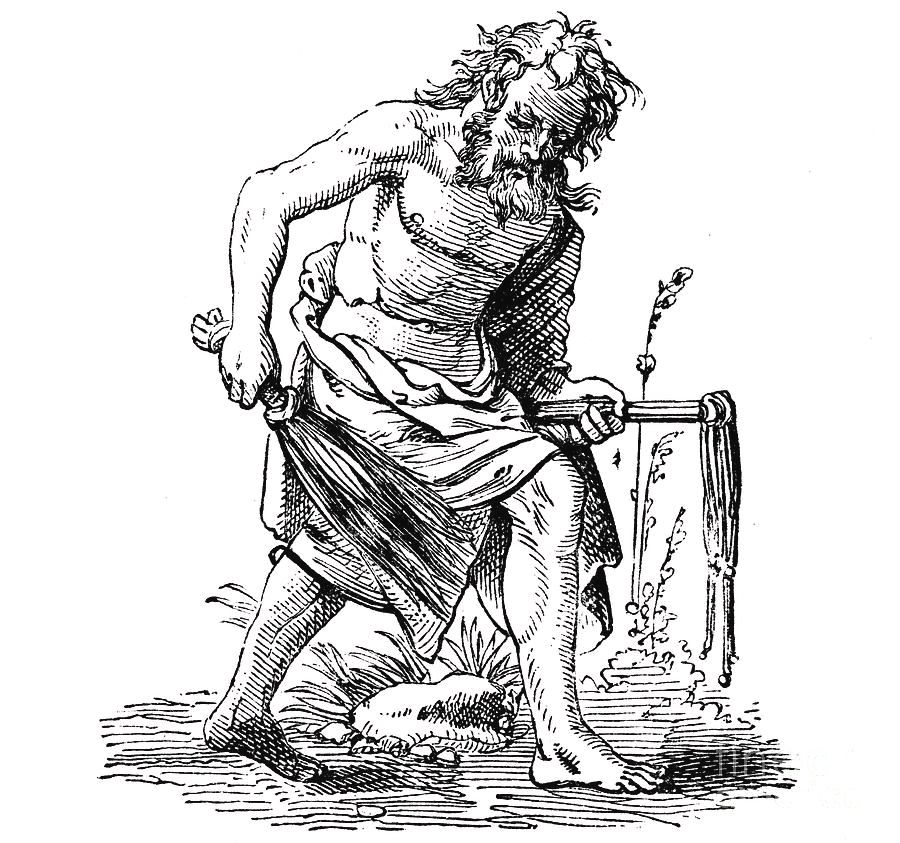
Conclusion: Faith must become a way of life
The Protestant concern for grace remains indispensable. No Christian discipline should become a means of bargaining with God, displaying spiritual superiority, or imagining that suffering can purchase salvation. Both Catholics and Protestants agree on this, however much the issue has been discussed historically, and even to this day.
The rejection of such errors in intention and attitude should not entail the abandonment of penance, fasting, abstinence, or bodily discipline.
Indeed, the Protestant traditions themselves demonstrate that these practices can and should be understood as voluntary instruments of repentance, prayer, humility, and self-command.
The question is not whether Christians should return to every historical penitential custom. It is whether a Christianity that emphasizes belief while neglecting disciplined transformation can adequately address the persistent human tendency to become enslaved to appetite, pride, and habit.
The body must be cared for, but its demands must not become absolute. Desire must be acknowledged, but not every desire should be obeyed. Forgiveness must be received as grace, but repentance must still become visible in the life of the repentant.
- Penance reminds us that wrongdoing has consequences and that genuine remorse demands change.
- Mortification teaches us that freedom requires the capacity to refuse immediate gratification.
- Fasting can turn attention toward prayer, while
- voluntary abstinence can reveal the difference between what we desire and what we truly need.
None of these practices guarantees holiness. None can replace faith, charity, or the grace of God.
But each can serve the difficult work of making Christian conviction something more than an opinion held in the mind.
- A faith that cannot discipline desire will struggle to transform conduct.
- A repentance that never changes behavior remains incomplete.
- A freedom that cannot say no to itself is a fragile kind of freedom indeed.
Perhaps the most valuable lesson for contemporary Protestantism is that it need not abandon the ancient Christian art of self-denial in order to remain faithful to its own theological inheritance.
The task is not to suffer for suffering’s sake. It is to learn, through grace and disciplined practice, to become master of oneself rather than servant to every passing appetite.